
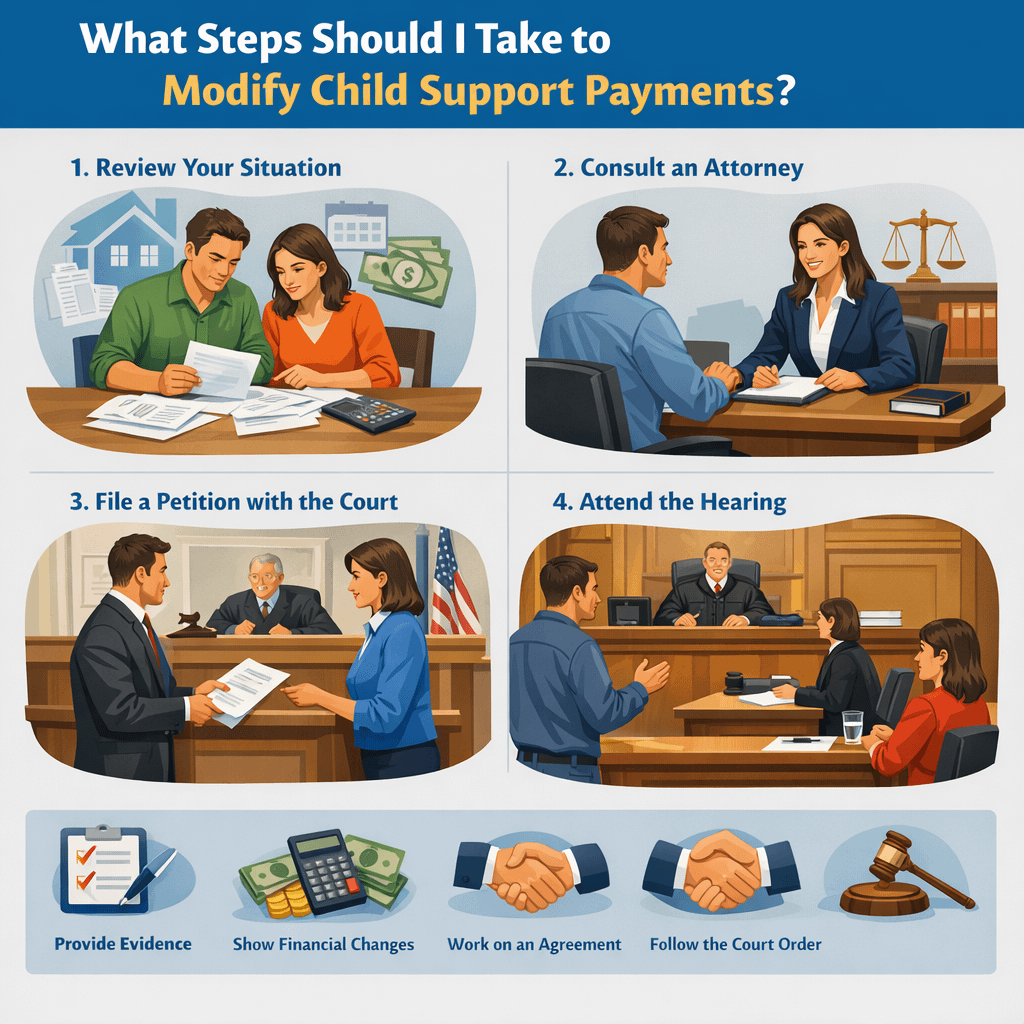
Modifying child support payments can be a daunting journey. Whether you’re a paying or receiving parent, life changes, like a new job, unexpected medical expenses, or changes in custody arrangements, might mean the current child support order no longer fits. Here’s a friendly guide to help you navigate the essentials of modifying child support payments.
Assess Your Situation
Before taking action, it’s important to determine whether your situation warrants a modification. Common reasons for modifying child support include:
- Change in Income: If the income of the paying parent has significantly increased or decreased, this could justify a modification.
- Changes in Child Needs: New medical needs or educational expenses could be a reason for adjustment.
- Change in Custody Arrangements: If the custody arrangement has significantly changed, perhaps needing more days with one parent, the support payments might need to reflect this.
Consider Mary, who recently lost her job. Her child support payments were based on her old salary, which she can no longer earn. This is a suitable scenario for seeking a modification.
Review Your Current Support Order
Start by closely examining your current child support order and understanding how the payments were initially calculated. Each state has guidelines that courts use to determine support amounts, typically based on income and other factors. Knowing how your payment amount was derived is crucial for understanding what might need to change.
Gather Documentation
Once you’re clear on your reasons and understand your current order, gather the necessary documentation to support your case. This may include:
- Recent pay stubs or proof of income changes.
- Medical bills or educational expenses for the child.
- Custody schedules or court orders showing any changes in custody arrangements.
Continuing the example, Mary should collect documentation that shows her job loss, any severance details, and her job search efforts, as well as any change in her child’s needs that might affect the support amount.
File a Petition for Modification
Next, you will need to officially file a petition for modification with the family court that issued the original order. This involves filing paperwork that asks the court to review and adjust the support. The form can often be found on your local family court’s website or obtained directly from the court’s clerk.
Notify the Other Parent
You must ensure the other parent is notified of your request for modification — this is called “service of process.” It’s a legal requirement to inform the other party, so they have the opportunity to respond. Failure to do so can result in delays or dismissal of your request.
For instance, if John seeks to modify his payments because he’s taken a higher-paying job, he needs to notify his ex-spouse officially about his income change and his petition for a fair adjustment in child support.
Attending Court Hearings
If your case goes to court, both parents will have the opportunity to present their evidence and arguments. It’s advisable, although not always necessary, to hire an attorney, as they can help make your case stronger and navigate the complexities of the legal system. If you represent yourself, be prepared to clearly and calmly present why the modification is justified.
Receiving the Court’s Decision
After reviewing all the information, the court will decide whether to modify the child support order. If approved, the new amount will be based on current financial situations and needs. Keep a copy of this new order for your records.
Practical Tips
- Stay Compliant: Until a formal modification is granted, continue making payments as per the existing order to avoid penalties.
- Keep Communication Open: When possible, discuss potential changes with the other parent. Amicable agreements can sometimes make the process smoother.
- Seek Mediation: If tensions run high, consider using a mediator to facilitate discussions before going to court.
Modifying child support payments involves navigating a structured legal process, but with the right approach and preparation, you can ensure that the support aligns with your family’s current situation. Just remember, life changes, and support orders can be adapted to fit those changes when justified.


