
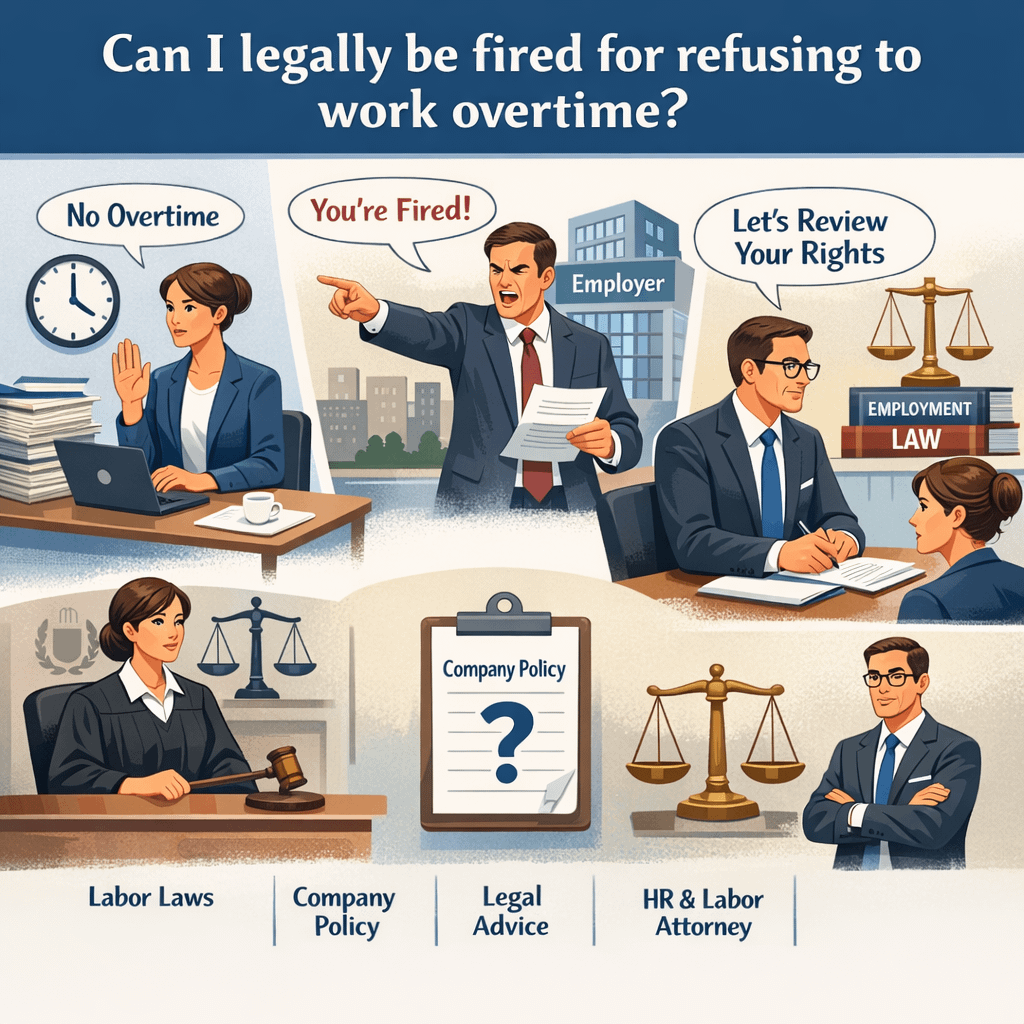
If you’ve ever been asked to stay late or come in on a weekend, you’ve probably wondered, “Can I legally be fired for refusing to work overtime?” This question is more common than you might think, and while the answer can vary depending on where you live, the nature of your job, and your employment contract, there are some general guidelines that can help you understand your rights as an employee.
Understanding At-Will Employment
In many places, including most of the United States, employment is considered “at-will.” This term means that an employer can fire an employee for almost any reason—or no reason at all—unless the firing violates a specific law or the terms of a contract. This also means that an employee can quit at any time without a reason. However, there are important exceptions to this rule, particularly when it comes to reasons that are illegal, such as discrimination or retaliation.
Federal and State Labor Laws
The Fair Labor Standards Act (FLSA) is a federal law in the U.S. that oversees wage and hour rules, including overtime pay. It generally requires that employees be paid time and a half for any hours worked over 40 in a workweek. However, the FLSA does not specifically require employers to offer overtime work, nor does it allow employees to refuse it. This might mean your employer can legally fire you for refusing, especially if there is no contract or agreement preventing them from doing so.
State laws can also impact this issue. Some states have more employee-friendly laws that might affect overtime work. It’s always a good idea to check your state’s labor laws to get a clearer picture.
Employment Contracts and Union Agreements
If you’re part of a union or have an employment contract, refusal to work overtime might be covered under terms that are more favorable to you. Unionized workers often have collective bargaining agreements that outline specific rules for overtime work, including how and when it can be mandated.
Similarly, an employment contract might stipulate conditions under which overtime can be required. Always review your contract for clauses related to hours and overtime. If you’re unsure or need clarification, discussing these documents with a legal professional can provide clarity.
Exempt vs. Non-exempt Employees
Under the FLSA, not all employees are entitled to overtime pay. Workers are categorized as either “exempt” or “non-exempt.” Non-exempt employees are typically eligible for overtime pay, while exempt employees are not. If you are classified as exempt, refusing to work overtime could still lead to termination if your position requires it.
Common exempt positions include certain managerial, professional, and administrative roles. Make sure you understand your designation, as this can influence how and when overtime is applied to your position and your rights regarding overtime refusal.
Practical Tips for Employees
1. Know Your Rights: Familiarize yourself with both federal and state labor laws applicable to overtime. The U.S. Department of Labor’s website is a great resource.
2. Review Your Contract: Look at your employment contract or agreement for details on overtime obligations.
3. Communicate Openly: If you are unable or unwilling to work overtime for a legitimate reason, communicate this with your supervisor. They may be able to accommodate your needs or find a compromise.
4. Document Everything: If you feel your rights are being violated, document interactions with your employer, including requests and responses for overtime work.
5. Seek Advice: If you’re uncertain, consider consulting with a labor attorney or your union representative to better understand your situation and options.
In conclusion, while you can often be required to work overtime, whether you can be legally fired for refusing depends on your employment type, agreements, and specific state laws. Understanding and asserting your rights can help navigate these situations effectively.


