Can I sue for defamation if someone spreads false rumors about me online?
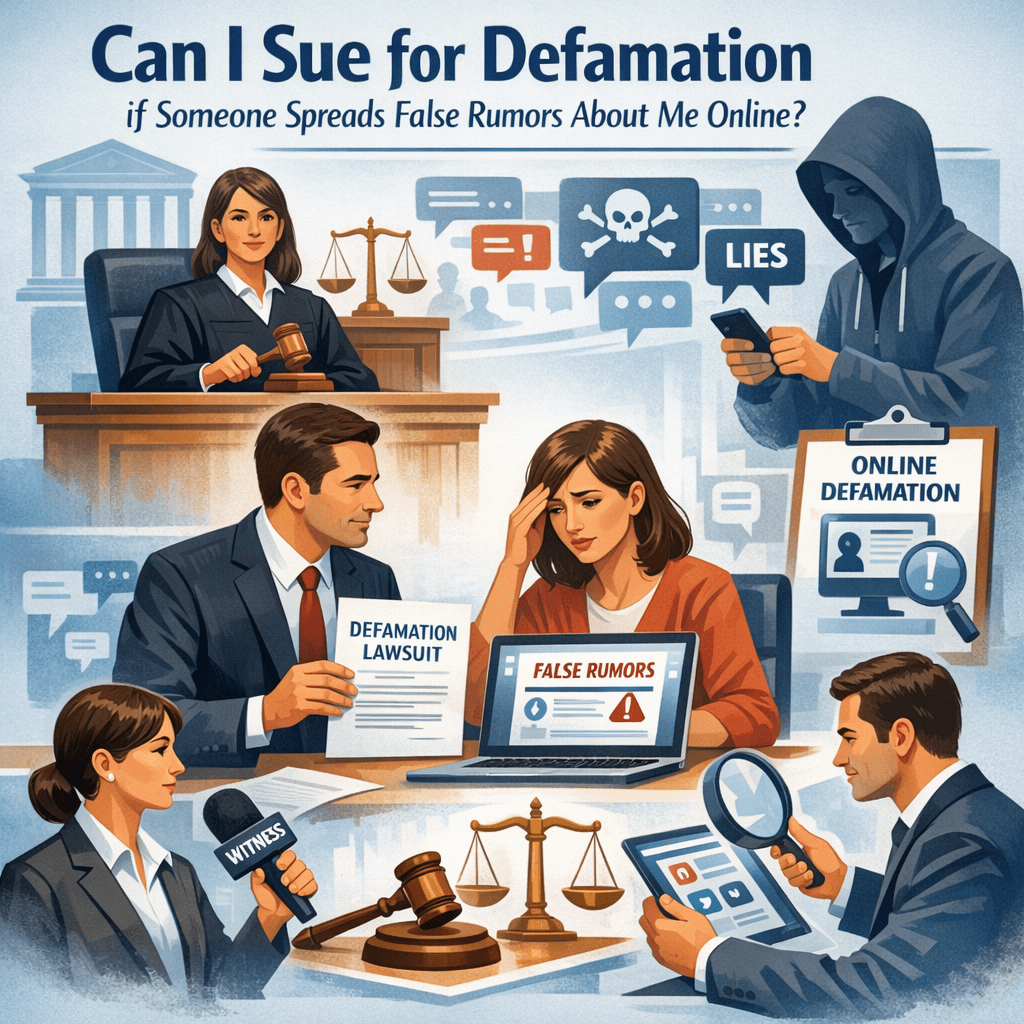
In today’s digital age, the ease of sharing information online is both a blessing and a curse. While connecting with friends and family is easier than ever, misinformation and harmful rumors can spread like wildfire. If you find yourself the subject of false online rumors, you might wonder: Can I sue for defamation?
Let’s break this down into simple terms, and I’ll guide you through what defamation is, how it works online, and what you might be able to do about it.
Understanding Defamation
Defamation is a legal term for when someone makes a false statement about you that harms your reputation. It can be split into two categories: libel and slander. Libel refers to written defamation, while slander relates to spoken false statements. Since we’re talking about online rumors, we’re mainly dealing with libel.
To successfully sue for defamation, you generally need to prove the following:
1. False Statement: The statement must be false. You can’t claim defamation for a true, albeit unflattering, statement. 2. Publication: The false statement must have been published or shared with others. In the online context, this could mean posted on social media, a website, or any platform where others can read it. 3. Injury: The statement must have caused you injury, which usually means damage to your reputation. This can result in social, professional, or financial harm.
4. Unprivileged: The statement must not be protected by a certain type of privilege. For instance, sometimes statements made during judicial proceedings have a privilege that prevents them from being considered defamation.
Defamation Online
The internet offers a unique challenge when it comes to defamation because of the anonymity and speed at which information spreads. Suppose someone tweets that you stole money without providing proof, or a blog post falsely accuses you of unethical behavior at work. These could both potentially be cases of defamation — if they meet the criteria mentioned earlier.
However, there are important nuances to keep in mind:
- Opinion vs. Fact: Expressing an opinion is not considered defamation. If someone says, “I think Jamie is dishonest,” that might be unkind, but it’s an opinion. However, if they state, “Jamie was fired for stealing at work,” and it’s untrue, that’s a statement of fact and could be defamatory.
- Anonymity: Many online platforms allow users to remain anonymous, making it harder to pinpoint the source of the defamation. Still, legal processes can sometimes unveil these identities, typically requiring a court order.
Steps to Take if You Feel Defamed
Before you rush to court, consider a few practical steps:
1. Document Everything: Take screenshots and record links to the defamatory content. Capture dates, times, and any other relevant details.
2. Request Removal: Contact the platform where the defamatory statement appears, request it be taken down, or report it as a violation of their terms of service.
3. Reach Out: If you know who posted the information, consider reaching out directly to ask for a retraction or correction. Sometimes this can resolve the issue without legal action.
4. Consult a Lawyer: If the statement is significantly harmful and none of the above steps work, seek advice from a lawyer. They can help assess the strength of your case and guide you on the next steps.
What if the Defamer is in Another Country?
The global nature of the internet adds a complication. Different countries have different defamation laws, which can affect how and where you might bring a lawsuit. A lawyer with international experience can provide guidance in these cases.
In conclusion, while suing for defamation because of online rumors is possible, it’s important to weigh the pros and cons of legal action. Going to court can be time-consuming and costly. Sometimes, a simpler strategy like requesting removal or issuing a counter-notice might achieve your goal. Always consider your options carefully and consult a legal professional to understand the best approach tailored to your situation.


