
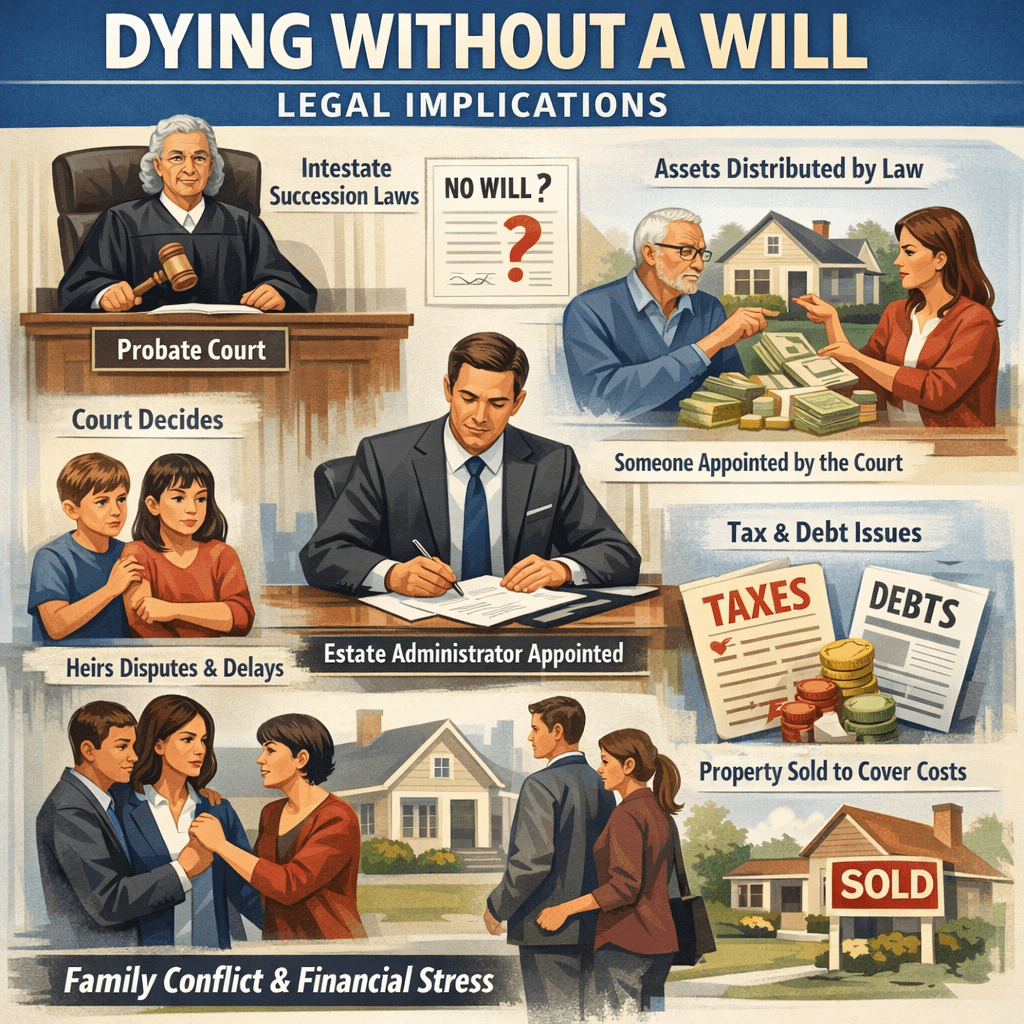
Preparing for the end of life is never a pleasant thought, but ensuring your wishes are honored and your loved ones are taken care of is crucial. One of the key ways to do this is by having a will. But what happens if you pass away without one? Let’s unpack the legal implications.
When someone dies without a will, they are said to have died “intestate.” This situation triggers state-specific laws called intestacy laws, which dictate how the deceased person’s assets are distributed. These laws can be quite rigid, often lacking the flexibility of a personalized will that reflects an individual’s desires. Let’s explore how this process works and how it might impact your loved ones.
The Basics of Intestacy
Intestacy laws vary by state, but the general principle is to distribute your assets to your closest living relatives. If you are married, your spouse is often the primary beneficiary. However, the distribution to your spouse may not be what you expect. In some states, the spouse may share your estate with your children or even your parents. For example, if you are married with children, your assets might be split equally between your spouse and the children.
If you aren’t married and have no children, the estate generally goes to your parents. If your parents are no longer living, the assets might go to siblings. Each state has a detailed hierarchy to determine who gets what, which can lead to unexpected or unintended results.
Examples of Intestate Distribution
Imagine Jane, a single mother with two young children, passes away without a will. Under intestacy laws, her assets might be split between her children. This could be problematic if Jane intended her entire estate to be held in trust for the benefit of her children until they reached adulthood. Without a will specifying this, her estate might be divided and managed by someone the state appoints, potentially incurring legal fees and involving additional complexities.
In a more complex example, consider Bob, who was in a long-term domestic partnership with Alex. Many states do not recognize domestic partnerships in their intestacy laws, meaning Alex might receive nothing from Bob’s estate. Instead, Bob’s estate may go to relatives he may not have been close with.
What About Debts?
When a person dies, their debts do not vanish. The estate must settle outstanding debts before any asset distribution. This means if you owe money to credit card companies, for instance, that debt will be paid out of your estate before your heirs receive anything. While a will cannot erase these debts, it can direct how remaining assets should be distributed.
What About Minors?
If minor children are involved, dying without a will raises another critical issue: guardianship. The court will appoint a guardian for your children, and this person may not have been your preferred choice. Having a will allows you to name who you would like to care for your children, ensuring their guardian aligns with your values and wishes.
Intestate Succession Challenges
Families often find themselves in disputes due to the way intestacy laws distribute assets. If you own a business, have specific family heirlooms, or hold significant digital assets (like online accounts or cryptocurrencies), intestacy laws offer no guidance on handling these. Consequently, this can lead to conflict, costly legal battles, and strained family relationships.
Practical Tips to Avoid Dying Intestate
1. Create a Will: This is the most straightforward way to ensure your wishes are respected. It’s wise to review your will periodically, especially after significant life changes like marriage, divorce, or the birth of a child.
2. Discuss Your Plan: Have conversations with your beneficiaries to avoid surprises. Clear communication can help manage expectations and prevent disputes.
3. Seek Legal Advice: Consulting with an estate planning attorney can help you navigate complex situations, ensure that your will complies with state laws, and address unique asset distribution desires.
4. Consider a Trust: For more control after death, especially if minor children are involved, trusts can be an effective tool. They allow you to specify conditions for distribution and can provide ongoing management of your assets.
Understanding the significance of a will and planning accordingly can spare your family from added confusion and heartache during an already challenging time. By acting now, you protect the people and legacy you care about most, ensuring your wishes are crystal clear and legally recognized.


