
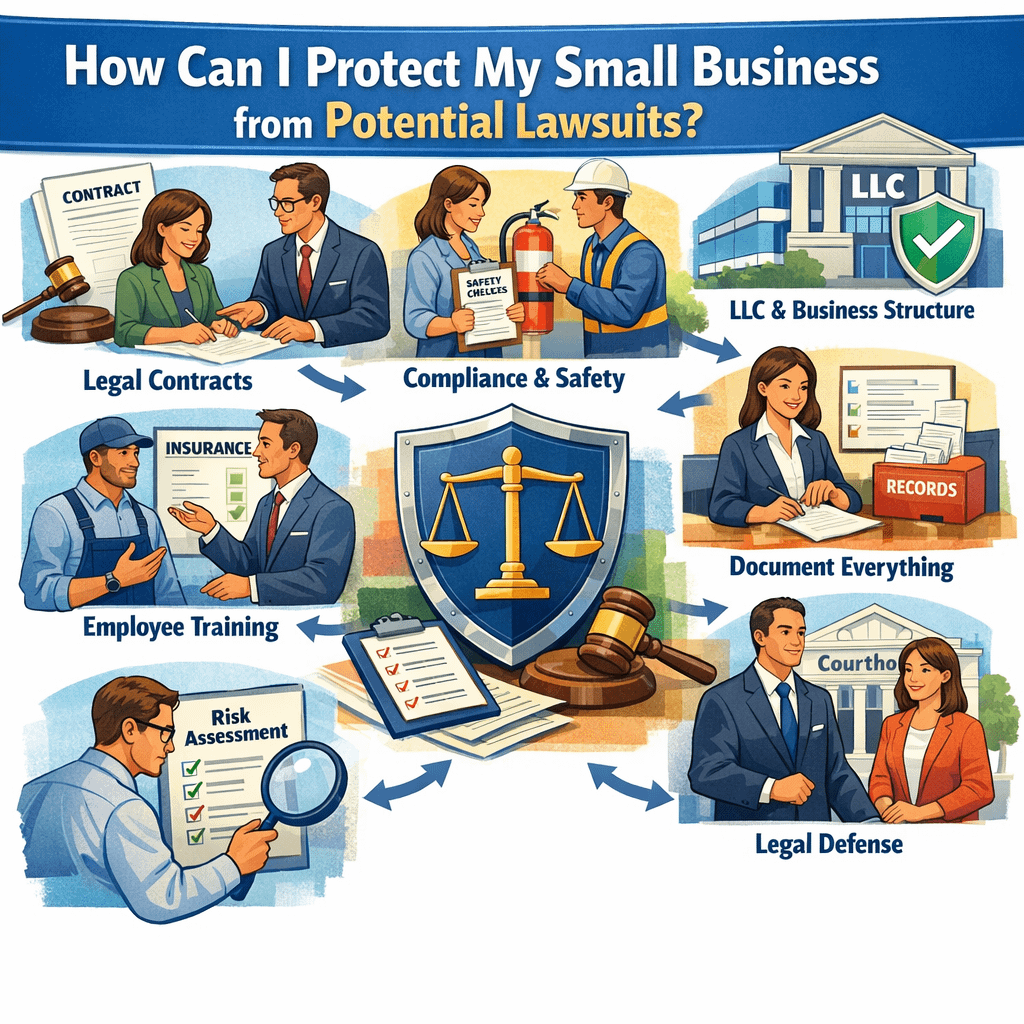
In any thriving small business, exciting new opportunities and a passionate drive to succeed often come with their own set of challenges. Among these challenges is the potential risk of a lawsuit. One of the largest threats to small businesses, lawsuits can emerge from a variety of sources, from dissatisfied customers to disputes with suppliers, or even conflicts with employees. Fortunately, there are proactive steps you can take to shield your business from these legal perils.
Embrace Solid Contracts
It’s essential to have well-drafted contracts in place when engaging with clients, suppliers, and partners. Contracts clarify expectations, outline the scope of work, establish payment terms, and specify what happens if something goes wrong. A written agreement serves as a clear reference for both parties, helping to prevent misunderstandings and disputes. Consider involving a legal professional to review or draft these contracts, ensuring they cover common scenarios your business might encounter.
Form a Legal Entity
Operating your business as a sole proprietorship can leave you personally exposed to liabilities. To protect your personal assets, consider establishing a legal entity, such as a Limited Liability Company (LLC) or a corporation. These structures create a legal separation between your personal and business finances, limiting your personal liability for business debts and obligations. For instance, if your business faces a lawsuit, your personal house and bank accounts are generally not at risk.
Maintain Comprehensive Insurance
Insurance is a cornerstone of any risk management strategy. At a minimum, consider obtaining general liability insurance, which can help cover legal fees, settlements, and judgments if your business is sued for injury or property damage. Depending on your industry, additional policies such as professional liability (or errors and omissions insurance) might be necessary to cover risks associated with the services you provide. Workers’ compensation insurance is also important if you have employees, as it covers medical expenses and lost wages if employees are injured on the job.
Foster a Positive Work Environment
Employment disputes are a common source of legal action against small businesses. Cultivating a fair and positive workplace can significantly reduce these risks. Clearly communicate expectations and performance standards to your employees and maintain consistency in your procedures. Having an employee handbook that outlines company policies, procedures, and employee rights is a practical tool for both managing your team and protecting your business legally.
Engage in Regular Compliance Checks
Local, state, and federal regulations can be complex and ever-changing, and failing to comply can lead to costly penalties or lawsuits. Regularly review your business practices against these regulations. Pay particular attention to labor laws, health and safety standards, and tax obligations. It’s wise to consult with a legal advisor who specializes in small business law to ensure you remain compliant in every aspect. Keeping up-to-date with changes in legislation will keep your business away from unwanted legal troubles.
Practice Quality Customer Service
Customer service can be your first line of defense against lawsuits. By ensuring customer satisfaction, you can often resolve issues before they escalate into legal problems. Encourage open communication and be responsive to customer concerns and feedback. Going above and beyond to address any disputes can transform unhappy customers into loyal brand advocates and sidestep potential litigation.
Document Everything
From employee evaluations to customer contracts and business transactions, thorough documentation can be indispensable during disputes. Ensure you keep detailed records of agreements, communications, and decisions. This not only helps in resolving misunderstandings but can also prove invaluable if you need to demonstrate your position during legal proceedings.
In addition to implementing these preventative measures, it’s wise to foster a relationship with an attorney who understands your business and industry. Regular consultations with legal professionals can help identify potential risks before they evolve into lawsuits. Remember, the goal isn’t to eliminate all risks—an impossible task—but to manage them wisely to prevent them from getting out of control.
By adopting these strategies and continuously evaluating the various aspects of your operations, you can fortify your business against potential legal pitfalls and continue to focus on what you do best: growing your enterprise.


