
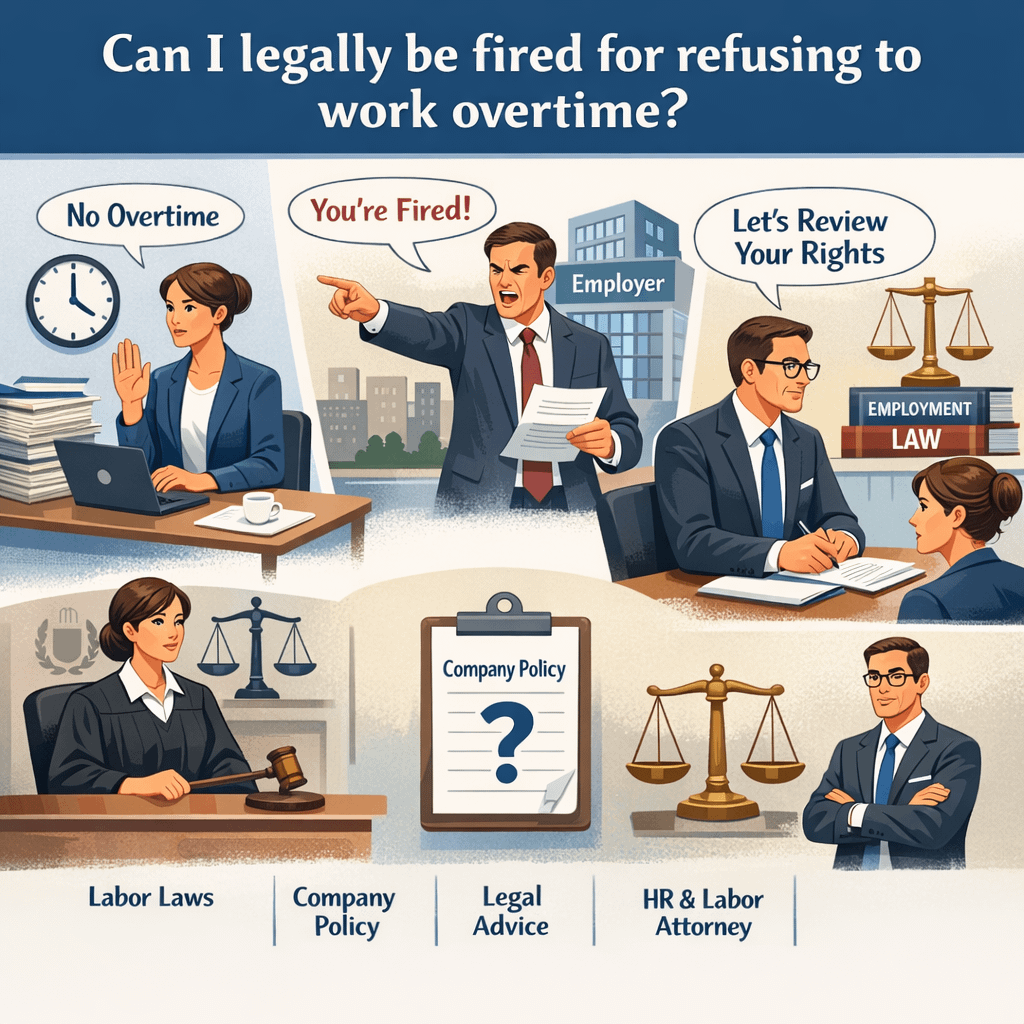
Navigating the complexities of employment laws can sometimes feel a bit overwhelming, especially when it involves questions about overtime. One of the most frequent concerns is whether you can legally be fired for refusing to work overtime. Here, we’ll break down the fundamentals so you can better understand your rights and responsibilities as an employee and what you can do if you find yourself in this situation.
Understanding Employment-at-Will
Most employment in the United States is governed by the “employment-at-will” doctrine. This means that, in the absence of a specific contract stating otherwise, employers can terminate employees for almost any reason, or even no reason at all—as long as it isn’t illegal. Illegal reasons would include discrimination based on race, gender, age, or retaliation for whistleblowing, among others.
Under this doctrine, an employer might legally fire you for refusing to work overtime, unless your refusal is protected by another law or a specific employment agreement.
When Is Overtime Mandatory?
Overtime generally comes into play for non-exempt employees—those who are typically paid hourly and are not exempt from protections under the Fair Labor Standards Act (FLSA). Under the FLSA, non-exempt employees must receive overtime pay for hours worked over 40 in a workweek at a rate not less than time and one-half their regular rates of pay.
Importantly, the FLSA does not mandate that employers must offer overtime, nor does it prohibit employers from requiring employees to work overtime. Therefore, under federal law, if your employer requires overtime, you would be obligated to work those hours or face potential termination unless exceptions apply.
Exceptions and Protections
There are exceptions and additional protections under state laws or individual employment contracts, as well as certain collective bargaining agreements with unionized workers. For example, some states may have stricter regulations that provide more rights for employees regarding overtime.
Certain employees might have specific agreements that outline conditions for overtime. If your employment contract or a company’s policy handbook states you cannot be forced to work overtime, then your refusal would generally be protected.
Additionally, refusal to work overtime can be protected under certain circumstances. For instance, if the overtime work violates safety and health standards, or if refusing is due to legitimate health-related issues, there might be grounds for protection.
Examples to Illustrate
Consider Sarah, a non-exempt worker at a retail store. Her employer schedules her for a 50-hour workweek during the holiday season. Sarah, without a binding employment contract or union agreement saying otherwise, is generally required to work these hours and can be terminated if she refuses. However, if Sarah’s state has a specific law that limits mandatory overtime, she might be protected.
Meanwhile, Mark, a software developer with a contract stating he will not work over 40 hours unless he consents could refuse overtime without fear of termination—assuming the company adheres to its contractual obligations. If forced anyway, Mark might have legal grounds to challenge any adverse actions against him.
Practical Tips
1. Check Your Employment Agreement: It’s crucial to be aware of your employment contract or any company policy documentation. These documents might include specific terms about working hours and overtime.
2. Know Your State Laws: They might offer additional protections beyond federal regulations.
3. Communicate Concerns: If you have legitimate reasons for not being able to work overtime, communicate openly with your employer. They may offer accommodations or alter scheduling practices.
4. Consult an Expert: If you feel that you’re being unfairly targeted or that your rights are being infringed upon, speaking with an employment attorney can provide clarity and guidance on your legal options.
5. Union Support: If applicable, seek guidance from your union representative, as unions often have negotiated terms about overtime that must be honored by the employer.
Understanding your rights about overtime is essential, and knowing both the federal framework and your state’s specifics can empower you in your employment relationship. Keep these insights in mind while navigating workplace demands to maintain clarity about your position and options.


