
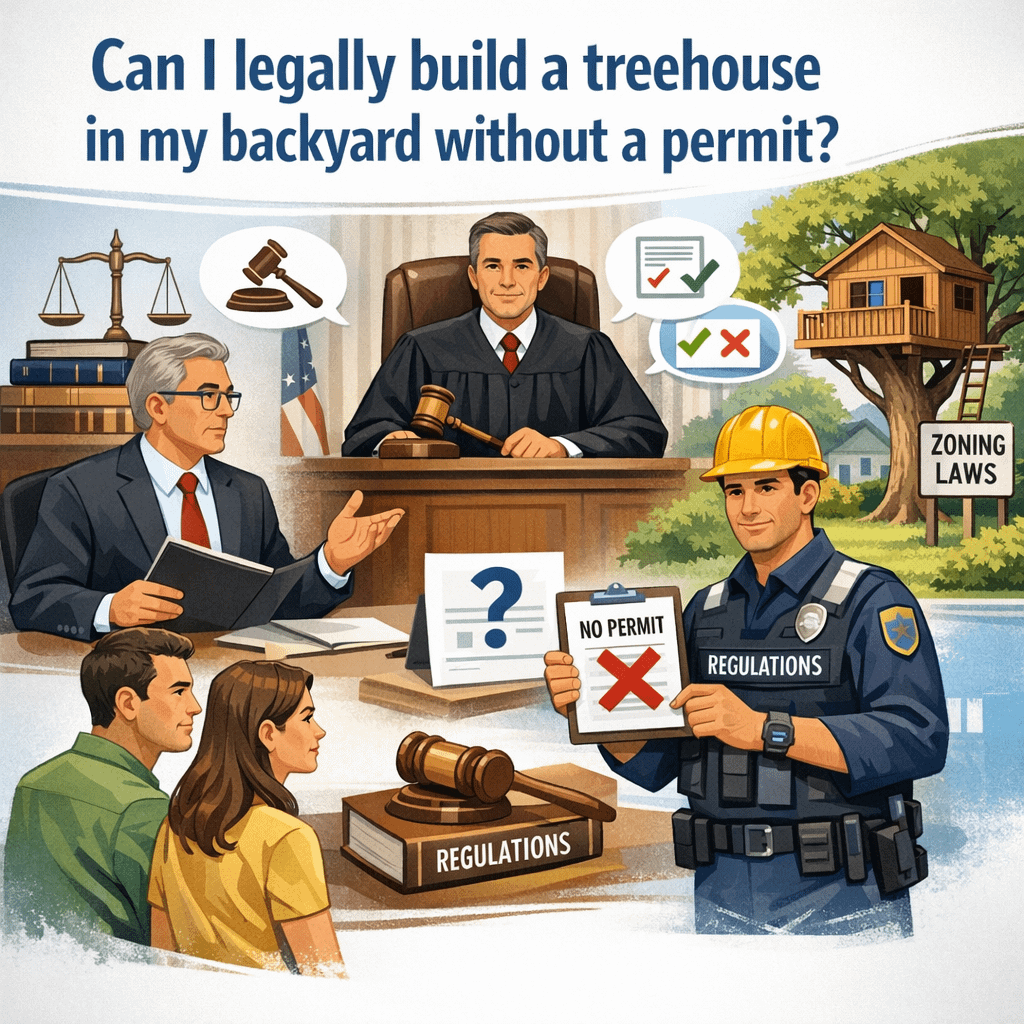
Imagine the delight on the faces of children as they ascend their very own treehouse, hidden among the branches of a sturdy backyard tree. You might be thinking about building this magical hideaway in your backyard. But before you grab those hammers and nails, it’s crucial to know whether you can legally build a treehouse without a permit.
Understanding Local Zoning Laws
The first step in determining if you need a permit for a treehouse is to familiarize yourself with your local zoning laws. Zoning laws are regulations governing how land can be used in different areas, and they often dictate what can be built on residential properties. These laws can vary significantly from one place to another.
For example, if you’re living in a dense urban area, the regulations might be stricter than in a more rural setting. Urban areas may have specific height restrictions or rules about how far from your property line a structure can be. On the other hand, rural areas might have more lenient guidelines, giving you more freedom in your treehouse design.
Why Permits Might Be Required
Permits serve several important purposes. They ensure that structures are safe and comply with building codes – the set of standards concerning construction and safety aspects such as electrical wiring, plumbing, and structural integrity.
If your treehouse is going to include heavy construction or utilities like electricity, chances are high you’ll need a building permit. Even if your build is simpler, any structure over a certain height or size might require one.
Start with Your Local Building Department
Your local building or planning department is the best place to start when figuring out the specific requirements for building a treehouse. They can inform you about zoning laws, permit requirements, and local building codes. This information helps ensure your treehouse is safe and legally compliant.
Some municipalities have no formal requirements for treehouses, while others may treat them similar to sheds or other outbuildings, requiring adherence to specific setbacks and height restrictions. Checking these details ahead of time can save you a lot of headaches down the road.
Neighbors and Nuisances
Beyond permits, it’s wise to consider how your treehouse could affect your neighbors. A treehouse built too close to a property line could infringe on a neighbor’s privacy, leading to disputes. Keeping your neighbors informed about your plans and addressing concerns early on can prevent future conflicts.
In some neighborhoods, homeowners’ associations (HOAs) might have specific rules regarding structures like treehouses, which are separate from city or county regulations. Reviewing your HOA’s guidelines can prevent potential fines or demands to dismantle a structure that fails to comply.
Practical Tips for Building Your Treehouse
1. Start Small: If possible, keep your treehouse compact. Smaller structures are less likely to require a permit and are easier to stay within building regulations. 2. Location Matters: Choose a tree that is safe and healthy. You will want to ensure that the tree can support the structure safely. 3. Consider Accessibility: Ensure the treehouse can be safely accessed by children – think sturdy ladders or steps.
4. Clean and Maintain: A clean and well-maintained treehouse is less likely to attract complaints from neighbors or require further scrutiny by local authorities.
Conclusion
Before embarking on your backyard adventure, doing your homework on local regulations is essential. By understanding zoning laws, building codes, and potential neighborhood conflicts, you can ensure your treehouse-building adventure is legally sound and enjoyable for all involved.
With the right preparation and understanding, the dream of building a treehouse can become a reality without any legal hassle, providing a haven where imaginations can soar as high as the treetops.


