
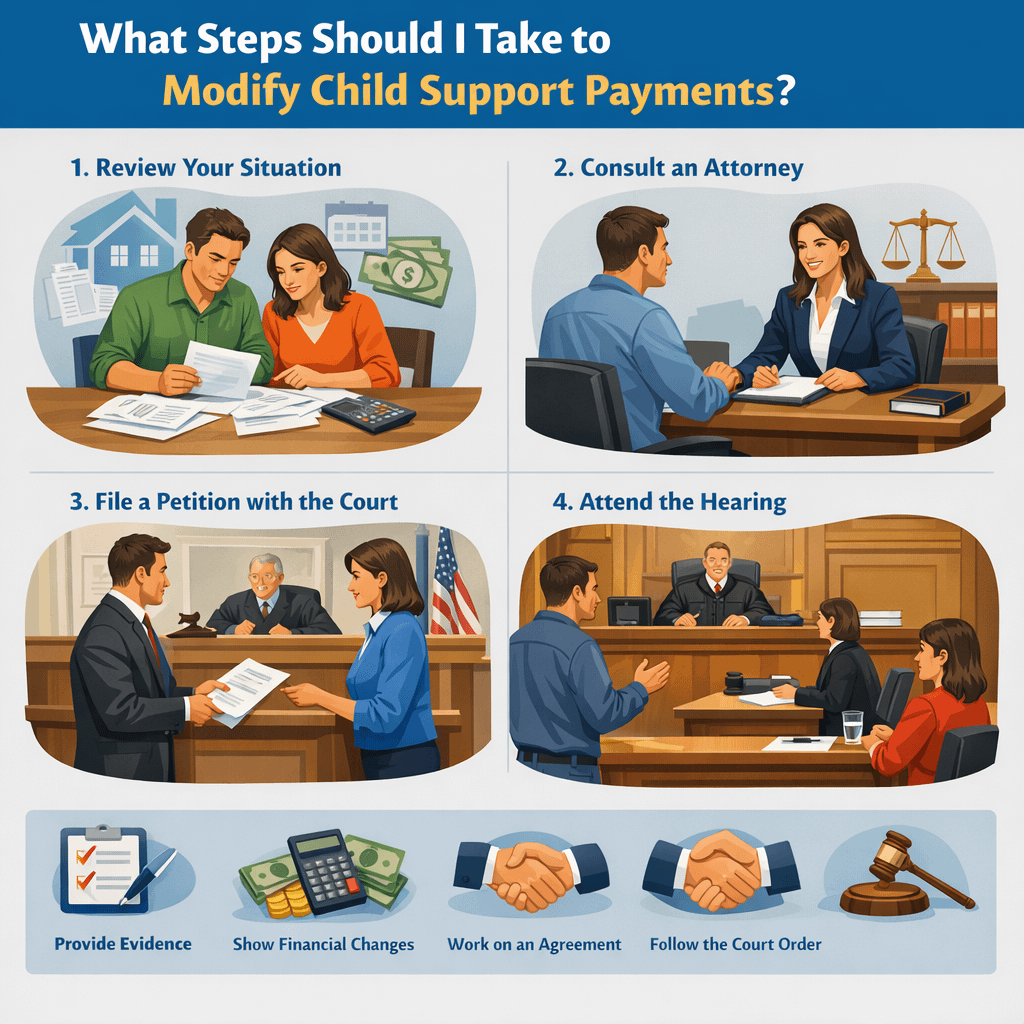
Child support payments are designed to ensure that a child’s needs are met even when parents live apart. However, life can throw us curveballs, and there might come a time when the agreed-upon payments no longer make sense. Whether you’re experiencing a significant shift in your financial situation, or there’s been a change in your child’s needs, modifying child support payments might become necessary. Here’s your friendly guide to understanding when and how you can initiate the process.
1. Recognize the Need for Change
The first step is recognizing when a change is appropriate. Common reasons for modifying child support include:
- Job Loss or Income Change: A significant decrease or increase in your earnings or the other parent’s income.
- Changes in the Child’s Needs: New educational needs, unexpected medical expenses, or other changes that affect the cost of raising your child.
- Remarriage or New Dependents: Either parent getting remarried or having more children, impacting financial responsibilities.
- Custody Changes: If the parenting schedule changes significantly, this might warrant a modification.
For example, if you’ve lost your job, you might need to adjust your payments to reflect your new reality. Or, if your child needs special tutoring that significantly hikes expenses, this also might justify a modification.
2. Collect and Review Documentation
Once you’ve identified the need for change, gather supporting documents to bolster your case. This might include:
- Recent pay stubs or tax returns demonstrating a change in income.
- Medical bills or school tuition statements showing new expenses.
- Any legal documents evidencing changes in custody or living arrangements.
Keeping precise records is essential, as the court needs solid evidence to consider your request.
Practical Tip: Start organizing these documents as soon as a change occurs. It’s easier to prove your case with a trail of documentation.
3. Communicate with the Other Parent
Before heading to court, try speaking with the other parent. Sometimes, parents can agree independently to adapt to changed circumstances. This can lead to a quicker, smoother adjustment without needing legal intervention.
However, even if you reach a mutual agreement, it’s vital to formalize any change through the court to ensure it’s legally binding. This prevents potential disputes in the future.
4. File a Motion to Modify Child Support
If you cannot reach an agreement, or you want to make it official even if you have one, you’ll need to file a motion to modify the child support order. Here’s what generally happens:
- Fill Out Necessary Forms: These can typically be obtained from the clerk of the court or its website. You may need to complete additional financial statements.
- Submit to the Court: File the forms with the family court that handled your initial child support case.
- Serve the Other Parent: Legally notify the other parent about the motion using a professional process server or a local sheriff’s office, verifying proper legal service.
5. Prepare for a Court Hearing
After filing, you’ll likely be required to attend a court hearing. Be prepared to explain why the change is necessary and provide all relevant documentation. If possible, and especially if things could get contentious, consider hiring an attorney for representation.
6. Adhere to the Modified Court Order
If the court agrees that a modification is warranted, it will issue a new child support order. It’s essential to follow the updated terms immediately. Keep a copy of this new order, and make sure all payment adjustments are accurately reflected in your financial arrangements.
Practical Tip: Use online payment systems to keep a clear record of payments, ensuring both compliance and a record for future reference if needed.
Modifying child support can seem daunting, but understanding the steps and preparing carefully can make the process smoother. Remember, these decisions are always aimed at supporting the best interests of the child, reflecting the realities of life’s inevitable changes.


