
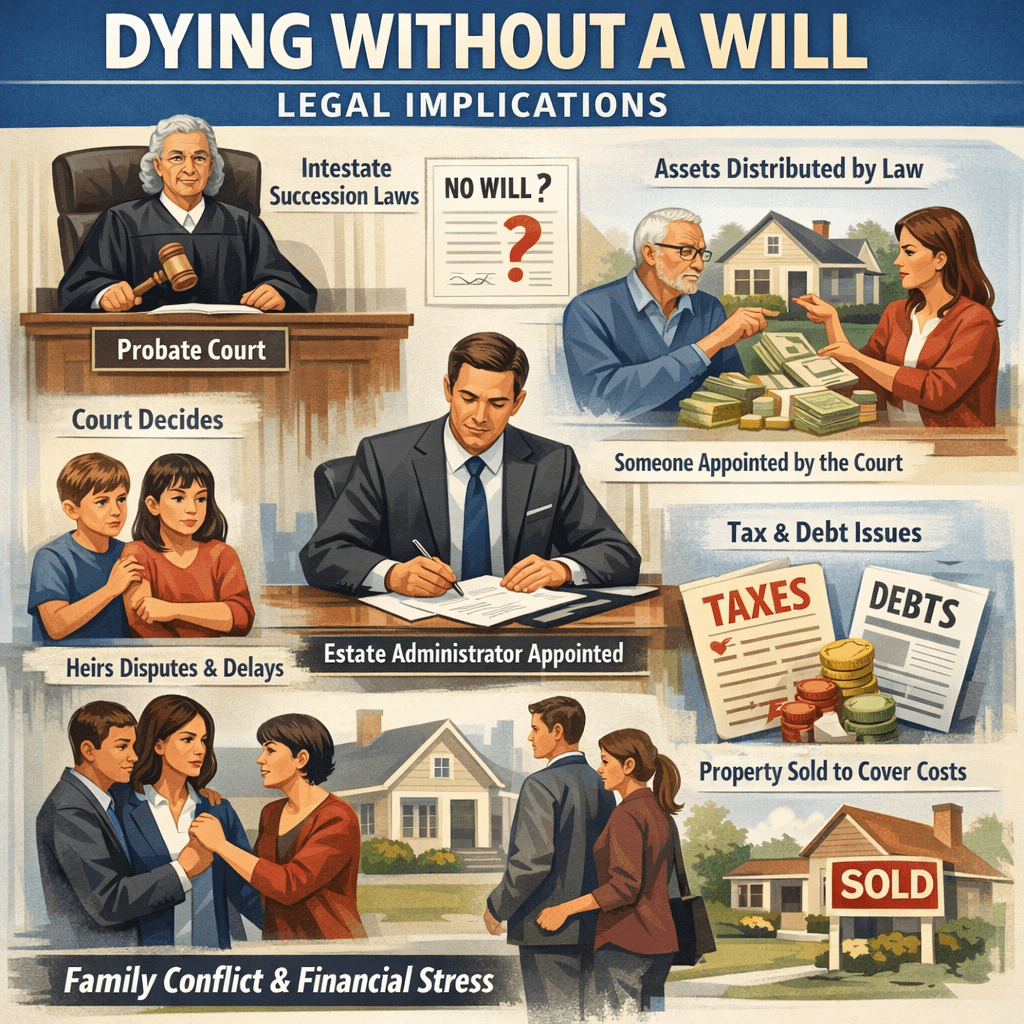
Dying without a will might seem like something that won’t affect most people, but it’s actually quite common. When someone passes away without having a will in place, it is legally termed as dying “intestate.” While the law has mechanisms to deal with such situations, it’s often far from ideal. Let’s take a closer look at what happens when there isn’t a will and how it could potentially affect your loved ones.
When a person dies intestate, their estate is distributed according to the intestacy laws of the state where they lived. These laws are essentially a one-size-fits-all approach, which means they might not align with how you would have wanted your assets divided. Generally, the process prioritizes close relatives, such as spouses and children, but it can get complicated.
Let’s break down a few scenarios:
1. You Have a Spouse but No Children: In most states, the surviving spouse will receive the entire estate. However, some states might split the estate between the surviving spouse and your parents. This could lead to unintended family tensions if your spouse had planned differently.
2. You Have Children but No Spouse: The estate typically gets divided equally among your children. If they are minors, the court will appoint a guardian to manage their share until they reach adulthood. This could be someone you wouldn’t have chosen to handle your children’s inheritance.
3. You Have a Spouse and Children: Many states would split the estate between your spouse and children. This might leave your spouse without enough financial support, especially if your assets are tied up in property or other non-liquid forms.
4. Unmarried and No Children: In this situation, your estate will likely go to your nearest relatives, such as parents or siblings. If no relatives are found, the estate could even go to the state.
In essence, dying without a will can lead to outcomes that might not reflect your intentions. Family members might disagree over how things should be handled, which can cause legal battles and strife during an already difficult time.
To avoid these scenarios, it’s crucial to consider writing a will—even a simple one. This document not only ensures that your wishes are followed but can also help prevent disputes among your loved ones. Here are some practical tips to guide you on this path:
- Start by Listing Your Assets: Include bank accounts, real estate, personal possessions, and investments. Knowing what you own helps clarify what you need to account for in your will.
- Choose Beneficiaries Thoughtfully: Decide who will inherit your assets. This could be family, friends, or charitable organizations. Specify how you want your assets divided to avoid assumptions.
- Appoint an Executor: This is someone you trust to carry out the instructions in your will. The executor should be responsible and organized, as they’ll be dealing with financial and administrative duties.
- Consider a Guardian for Minor Children: If you have young kids, name someone to take care of them. This ensures that the person you believe is best suited for the role can guide and support your children if you can’t.
- Keep It Updated: Laws, relationships, and your assets may change over time. Review your will periodically to ensure it still accurately reflects your wishes.
- Seek Professional Help: Drafting a will can be complex, and hiring an attorney can help ensure it’s done correctly, preventing any potential legal challenges in the future.
In summary, while nobody likes to dwell on their mortality, taking the step to draft a will is an act of care for your loved ones. It offers peace of mind, knowing that your affairs will be handled according to your wishes, reducing potential stress and disagreements when you aren’t around to mediate.


